Ivermectin is broken down by the liver, so it’s a fair question to ask before taking it: is it safe if your liver isn’t working at full capacity? Here’s what the clinical data actually shows, and what it means if you have a liver condition.
Ivermectin is metabolized by the liver, mainly through the CYP3A4 enzyme, so anyone with liver disease should talk to a doctor before taking it. Liver enzyme elevations occur in a minority of patients and are usually mild and temporary. Ivermectin isn’t formally contraindicated in liver disease, but there’s no standard FDA dose adjustment for hepatic impairment, which is exactly why medical supervision matters here rather than self-directed use.
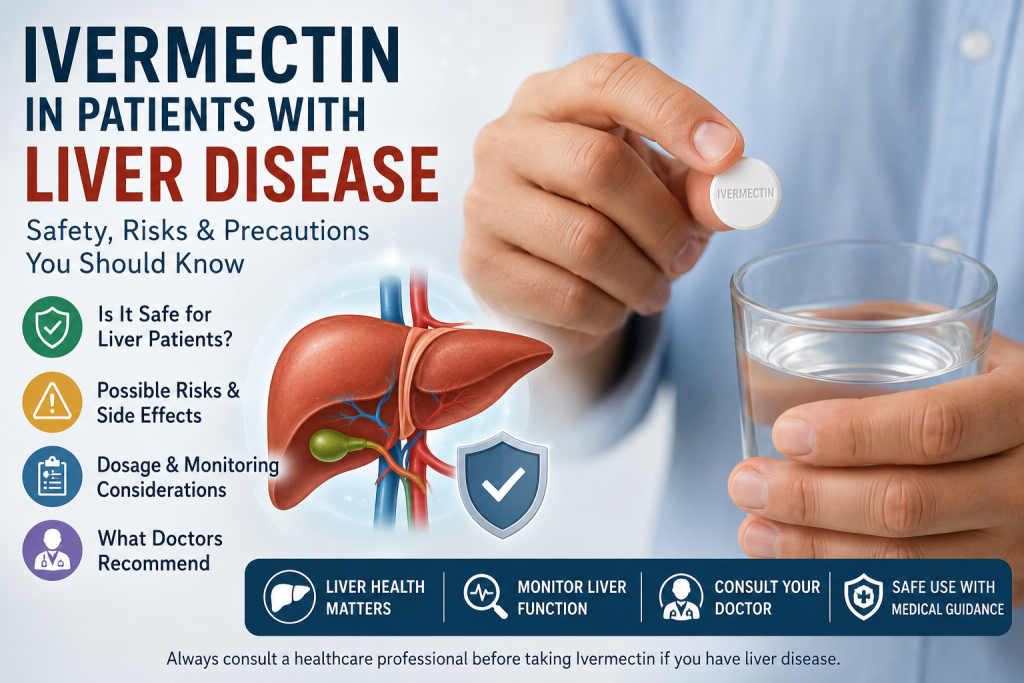
Is It Safe to Take Ivermectin If You Have Liver Disease?
For most people, ivermectin can be used with a diagnosed liver condition, but “most people” isn’t the same as “anyone, at any dose, without checking in with a doctor first.” The FDA prescribing information confirms that ivermectin is metabolized in the liver, and the NIH’s LiverTox database — the National Institutes of Health’s reference on drug-induced liver injury — rates ivermectin’s likelihood of causing liver injury as “D”: a possible but rare cause of mild, clinically apparent liver injury. That’s a reassuring rating, but it isn’t a zero.
In practice, this means ivermectin doesn’t carry a blanket contraindication for people with liver disease, and it isn’t singled out on the label as unsafe for common conditions ivermectin treats. What it does mean is that liver disease changes the risk calculus enough that a prescriber should weigh in — checking the type and severity of your liver condition, reviewing your other medications, and deciding whether any extra monitoring makes sense before you start.
How the Liver Processes Ivermectin (Metabolism)
Ivermectin is metabolized primarily by the CYP3A4 enzyme, with smaller contributions from CYP2D6 and CYP2E1, according to its FDA label. At normal therapeutic doses, ivermectin doesn’t meaningfully block the activity of these enzymes itself — but that’s a separate question from how well your liver can process the drug in the first place.
That second question is the one that matters for liver disease. When the liver is inflamed, scarred, or otherwise not functioning at full capacity, it can take longer to break down and clear medications that rely on it — including ivermectin. That slower clearance is the underlying reason clinicians pay closer attention to liver status before dosing, and it’s worth understanding alongside how ivermectin works in the body more broadly.
Does Ivermectin Cause Liver Damage?
How Often Do Liver Enzymes Change?
Liver enzyme elevations (ALT and/or AST) show up in a minority of people taking ivermectin. In FDA clinical trial data for strongyloidiasis, elevated ALT and/or AST occurred in about 2% of patients. Other studies reviewed by NIH’s LiverTox have reported higher rates of enzyme elevation in specific populations, but consistently describe those elevations as self-limiting and asymptomatic — meaning they resolved on their own without symptoms. Importantly, LiverTox states that ivermectin has not been associated with acute liver failure or chronic liver injury.
There is at least one documented case report of a more pronounced reaction: a patient developed a marked but temporary rise in liver enzymes after a single dose and recovered fully within three months, with no lasting damage. Cases like this are cited specifically because they’re rare enough to be individually documented — not because they’re a typical outcome.
What This Means in Practice
Put together, the evidence points to a consistent pattern: liver enzyme changes from ivermectin are uncommon, usually mild, and usually resolve without intervention. That’s genuinely reassuring — but “rare and usually mild” isn’t the same as “never worth watching for,” especially if you already have reduced liver function. If you’re weighing ivermectin against other possible side effects, liver enzyme changes are one more factor to flag with your prescriber rather than something to rule out on your own.
Ivermectin and Specific Liver Conditions
Ivermectin and Fatty Liver Disease (NAFLD)
Nonalcoholic fatty liver disease (NAFLD) is a buildup of excess fat in the liver not caused by heavy alcohol use, and it’s one of the most common liver conditions worldwide, according to the National Institute of Diabetes and Digestive and Kidney Diseases (NIDDK). There’s no ivermectin-specific contraindication for NAFLD in the prescribing information. That said, NAFLD can reduce the liver’s overall metabolic reserve, which is a general reason for caution with any liver-metabolized medication — including ivermectin — and a good reason to mention an NAFLD diagnosis to whoever is prescribing it.
Ivermectin and Cirrhosis
Cirrhosis is late-stage scarring of the liver that impairs its ability to function, as described by Mayo Clinic. Because cirrhosis represents a more significant loss of liver function than earlier-stage liver disease, it raises the stakes for any hepatically cleared drug more than milder conditions do. Ivermectin isn’t specifically contraindicated in cirrhosis, but this is exactly the kind of diagnosis where prescriber-guided dosing and monitoring — rather than following a standard dose by default — makes sense.
Ivermectin and Hepatitis
Hepatitis — inflammation of the liver, whether viral or from another cause — already places extra demand on liver function, so the same general caution applies: a liver working through active inflammation may not clear medications as efficiently as a healthy one. There isn’t robust published data specific to ivermectin use in people with active hepatitis, so rather than overstating a specific risk, the honest answer is that this combination hasn’t been well studied and is a reasonable thing to raise directly with a doctor.
Dosage Considerations for People With Liver Disease
Here’s a gap worth being upfront about: ivermectin’s FDA label does not include a specific dose-adjustment schedule for people with hepatic impairment. That’s not an oversight on our part — it’s a genuine limitation in the available prescribing guidance, and it’s precisely why dosing in anyone with known liver disease should be individualized by a prescriber rather than self-directed. A doctor can weigh your specific liver condition, its severity, your other medications, and your overall health before settling on an appropriate dose — something a standard label instruction can’t do on its own. This is also worth reading alongside what happens if you take too much ivermectin, since dosing errors carry their own separate risks.
Warning Signs to Watch For
Whether or not you have a pre-existing liver condition, it’s worth knowing the signs of a possible liver reaction after taking ivermectin:
- Jaundice — yellowing of the skin or the whites of the eyes
- Dark urine
- Unusual or persistent fatigue
- Abdominal pain, particularly in the upper right side
- Nausea or loss of appetite
If any of these appear after starting ivermectin, don’t wait it out — contact a healthcare provider promptly. For a broader picture of what’s typical versus what’s worth flagging, see what to expect after taking ivermectin.
Drug Interactions That May Affect Liver Metabolism
Because ivermectin is processed through the CYP3A4 pathway, other medications that use or affect that same pathway are relevant to your liver’s ability to clear both drugs efficiently. This matters more, not less, if your liver function is already reduced. Before starting ivermectin, share a complete list of your current medications and supplements with your prescriber or pharmacist — including anything you might not think to mention, like herbal supplements. If you’re specifically weighing ivermectin alongside another common prescription, see ivermectin and antibiotic interactions for more detail.
When to Talk to a Doctor Before Taking Ivermectin
Reach out to a healthcare provider before starting ivermectin if any of the following apply to you:
- You have a diagnosed liver condition — NAFLD, cirrhosis, hepatitis, or another form of liver disease
- You’ve had abnormal liver function test results in the past
- You drink alcohol heavily or have a history of alcohol-related liver concerns
- You have obesity or metabolic syndrome, which are risk factors for fatty liver disease
- You have a history of viral hepatitis
If any of these apply, ask your provider whether baseline liver function testing — and a follow-up test after starting treatment — makes sense for your situation. It’s a small step that can catch a rare reaction early, before it becomes a bigger problem.
As with any medication, the safest path with ivermectin and liver disease is the boring one: don’t guess, don’t self-adjust, and loop in a licensed healthcare provider who knows your specific liver condition and full medication list.
Frequently Asked Questions
In most cases, yes, under medical guidance. Ivermectin doesn’t carry a blanket contraindication for liver disease, but the decision should be individualized based on the type and severity of your condition, made together with a healthcare provider.
There’s no specific contraindication for cirrhosis in ivermectin’s prescribing information, but because cirrhosis significantly reduces liver function, closer monitoring and prescriber-guided dosing are advisable rather than assuming a standard dose is appropriate.
Rarely, and usually only mild, temporary liver enzyme elevations. According to NIH’s LiverTox, ivermectin has not been associated with acute liver failure or chronic liver injury.
There’s no ivermectin-specific contraindication for NAFLD, but because fatty liver disease can reduce the liver’s metabolic reserve, general caution and a conversation with your doctor are warranted.
Data specific to ivermectin and hepatitis is limited. Given that hepatitis already stresses liver function, it’s best discussed directly with a doctor before use rather than assumed safe by default.
There’s no official FDA-specified hepatic-impairment dosing schedule for ivermectin. Because of that gap, dosing for anyone with liver disease should be individualized by a prescriber rather than self-adjusted.
Jaundice (yellowing of skin or eyes), dark urine, unusual fatigue, abdominal pain, and nausea or loss of appetite. Seek medical attention promptly if any of these appear.
Yes, in a minority of patients — clinical trial data shows elevated ALT and/or AST in about 2% of patients treated for strongyloidiasis, and these elevations are typically mild and resolve without symptoms.
Primarily through the CYP3A4 enzyme, with smaller contributions from CYP2D6 and CYP2E1.
Generally yes, under medical supervision — the same core guidance as above applies. Ivermectin isn’t formally contraindicated, but liver problems are a reason to involve a healthcare provider in the decision, not a reason to avoid the medication automatically.
Fatty liver disease (NAFLD), cirrhosis, and hepatitis are the conditions most relevant to ivermectin use, since each can affect how efficiently the liver clears the drug.
Promptly, if you notice jaundice, dark urine, unusual fatigue, abdominal pain, or nausea. If you already have known liver disease, it’s also worth checking in with a doctor before you start, not just after.
Medical disclaimer: This article is for educational purposes only and is not a substitute for professional medical advice, diagnosis, or treatment. If you have liver disease or any other chronic health condition, talk to a licensed healthcare provider before starting or adjusting any medication, including ivermectin.
Sources
Mayo Clinic — Cirrhosis: Symptoms and Causes
FDA — Stromectol (ivermectin) Prescribing Information